
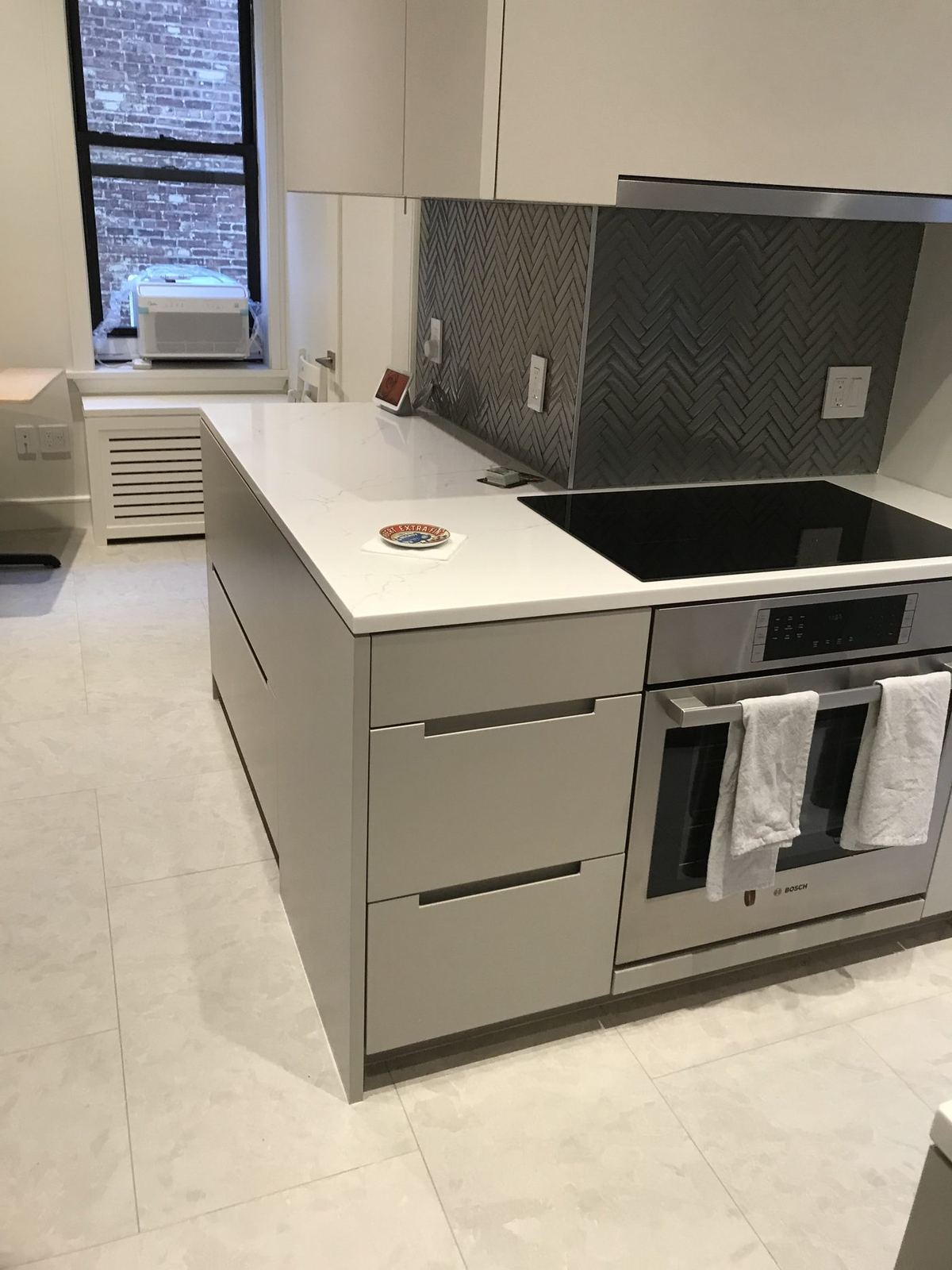
Walk a client through a finished renovation and watch where their eyes go. Not to the structure, not to the systems in the walls — to the paint line at the ceiling, the sheen consistency down a long corridor, the door that closes without its frame showing a scar. The last ten percent of a construction project — painting and finishing — carries a weight out of proportion to its share of the budget, because it is the part every occupant can see and touch. As a general contractor in NYC finishing commercial renovation in New York across offices, institutions, and retail spaces, we treat that last ten percent as its own discipline.
Preparation is the paint job
Professional painters have a saying in spirit if not in words: the coat you see is decided by the work you don't. Commercial surfaces arrive at painting day carrying the history of the whole project — patched penetrations, new drywall beside old plaster, nail pops, dings from every trade that passed through. Preparation is where that history gets erased: filling, sanding, skim-coating where surfaces demand it, caulking transitions, and priming so that new and old substrates take the finish identically.
Skipped preparation never stays skipped. It reappears as flashing through the topcoat, as seams telegraphing under raking light, as the patch a client finds in the first week and remembers longer than the whole renovation. Time spent on preparation is the cheapest quality a project can buy — which is exactly why schedules that compress the finish phase usually regret it.
Choosing the right system for the room
Commercial painting is not one product; it is a match between surface, use, and finish. A school corridor, a restaurant dining room, an office, and a medical suite ask different things of their walls: scrubbability where hands and carts pass daily, low odor where occupants return quickly, sheen levels that hide wear in high-traffic zones and present calmly in client-facing ones. Flat, eggshell, satin, and semi-gloss are not aesthetic whims — they trade appearance against durability and cleanability, room by room.
The specification conversation belongs early, not at the paint store during the final week. Colors and sheens decided while other trades are still working keep the finish phase from becoming a decision bottleneck at the moment the schedule can least afford one.
Sequence: paint is last, and "last" is a discipline
In a well-run interior, painting comes after the dusty work and before the final fixtures — after ceilings and drywall are complete, after flooring protection is planned, coordinated with the trim, doors, and hardware that finishing carpenters install alongside it. Paint applied too early becomes a sacrificial coat, scuffed by every trade that follows; paint applied in a rush at the very end inherits every delay the project accumulated.
Protection is part of the sequence: floors masked and covered, finished surfaces shielded, and completed rooms closed to traffic until handover. The difference between a freshly painted space and a formerly freshly painted space is about three days of unmanaged access.
Consistency across a whole floor
One room can forgive a slight variation. A corridor of twelve offices, a school wing, a retail floor — these expose inconsistency mercilessly: a sheen that shifts between batches, a color that drifts between the first wall and the last, cut lines that wander. Professional finishing controls this with disciplined habits: consistent materials across the project, the same application standards room to room, and lighting checks during the work, not after — because paint judged under construction light will be lived under daylight and evening light, and all three should be consulted before calling a wall done.
The punch list is a finishing tool, not a formality
Every project ends with a punch list — the walk-through catalog of touch-ups, corrections, and details to complete. On the finishing side, this is where a good contractor earns the client's final impression: paint nicks from furniture installation, a door edge, a line that needs one more pass. Treating the punch list as a scheduled phase with its own crew days — rather than an afternoon squeezed before handover — is what separates a project that ends crisply from one that fades out.
Owners can help here with a simple habit: walk the space once, thoroughly, with the contractor, and put everything on the list at once. A single complete list closes faster than a drip of discoveries.
Finishing a space your clients will judge?
Whether painting is the final phase of a full renovation or a standalone refresh that makes a working space feel new again, Art-Tech Construction Corp brings the same discipline: patient preparation, the right systems for each room, and a punch list worked to zero. We have been building and finishing commercial interiors across the five boroughs since 2017. Call (212) 960-3895 for a free consultation and a free quote.
Planning a project like the ones described here? Start with a free consultation and a free, detailed quote — call (212) 960-3895 or use the contact form.